Electric vehicles poised to transform property markets across Asia
Electric vehicles are changing how cars are made, sold, and used reshaping factories, supply chains, and real estate with new charging and battery needs.
EV manufacturing and consumption will reshape both the technical and business landscapes in the automotive sector over the next two decades.
4 November 2025
In 1886, Karl Benz patented the first automobile, by 1913 Henry Ford had introduced the assembly line, and just over a decade later the car replaced the horse and buggy. Change can come rapidly, if not uniformly, and disruption can emerge at any time. The next phase of transport evolution has arrived in the form of electric vehicles (EVs).
In the same way the advent of the combustion engine made certain businesses obsolete and compelled the repurposing of entire land tracts, EVs are on precipice of similarly transforming real estate markets over the next 20 years. Among the disruptions will be a transformed value chain, a pivot to modular manufacturing processes specific to EVs, logistics facilities increasingly adapting to new business models, and the adoption of charging infrastructure across asset types.
The auto industry structure has traditionally been built around its constituent parts, including manufacturing facilities, their supply chains, distribution networks, warehousing, sales centres and support centres as a start. Much in this vast and interconnected value chain is set to change as a result of the new assembly processes utilised in EV manufacturing. In requiring fewer components, EVs will usher in more streamlined supply chains and fewer contributors, however they will be more specialised facilities to cater to battery (gigafactories) and motor (clean rooms) assembly.
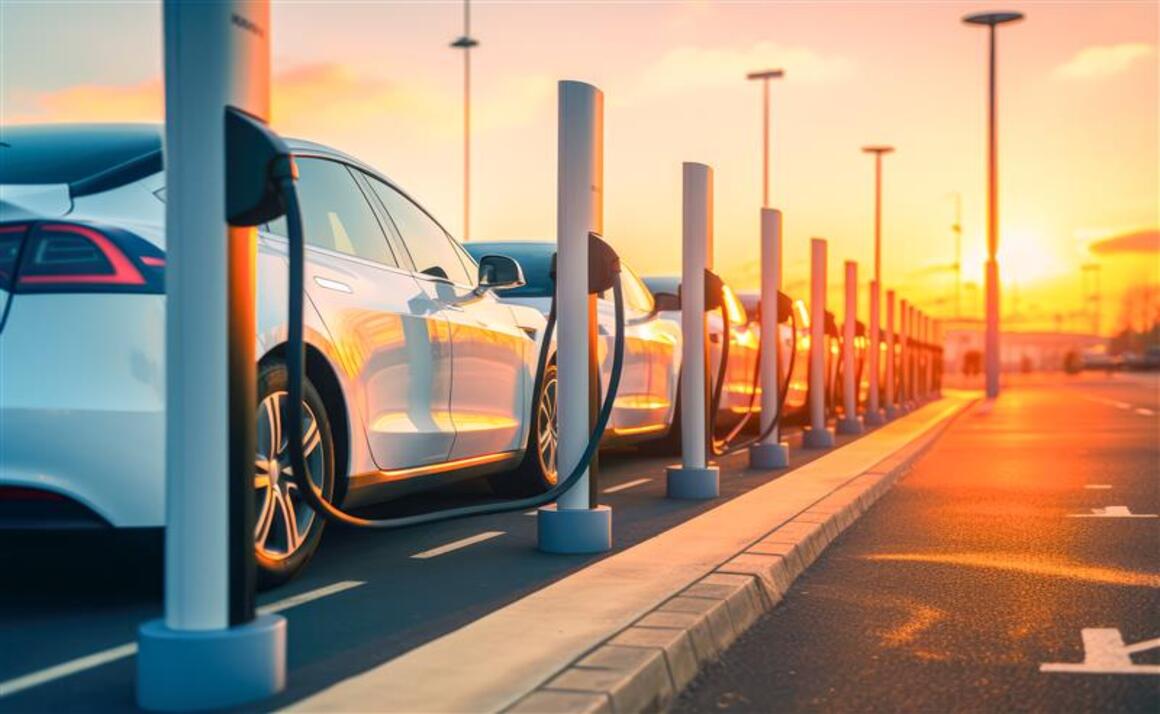
Logistics assets are also having to adapt to heavier vehicles and hazardous batteries, impacting shipping costs and handling protocols. As such, EV manufacturers are bypassing traditional distribution networks and going direct-to-consumer, driving online sales. Further still, dealerships are converting to pop-up shops, mobile showrooms and experience centres, and EV needs for less service for far fewer moving parts are converting service centres to hubs staffing EV-certified technicians. These are just parts of a comprehensive EV infrastructure that includes charging stations in place of petrol stations, perhaps the greatest influence on real estate going forward. Charging stations are required in all property classes, and can significantly raise values.
“Many older buildings will need to enhance power capacity to support things like fast chargers while landlords will need to partner with charge point operators to share installation costs and revenues,” says Simon Smith, Regional Head of Research & Consultancy, Asia Pacific. “Lastly, old batteries need to be repurposed or recycled for their rare materials which will require new battery dismantling, material recovery and remanufacturing facilities.”
The competitive landscape will also be impacted by the rise of EVs. A decade ago regional car manufacturing was dominated by legacy brands such as Toyota, Honda, Hyundai and Tata. Now, bold newcomers are challenging the traditional brands and breaking into hitherto high barrier markets. The EV market is dominated by China, and brands like BYD, SAIC and XPeng are contributing to China’s global-best 60% market share of EV sales. The traditional brands, however, are responding by embracing electrification and launching hybrid or all-electric lineups; building gigafactories worldwide and exploiting automation and AI to cut costs and raise quality; and partnering with global tech giants such as Google (with Volvo) and NVIDIA (with BYD) to serve as product differentiators.
Though the threat of tariffs and their potential impact on local production and supply chains is making long-term planning difficult, China remains the EV leader in Asia-Pacific, even as geopolitics, policy and access to talent are identifying new locations for growth. India’s Tata is gaining traction for its more affordable models, Indonesia for its substantial nickel reserves, Thailand as a hub for Chinese factories, and Vietnam for its burgeoning motorbike specialisation are emerging as key markets for local manufacturing and consumer adoption. As traditional manufacturing centres are abandoned in order to dodge labour unions and high costs, locations that adopt charging infrastructure, green electricity grids and purpose-built EV-forward mixed-use districts will be the ones to thrive in the coming years.
Further reading:
An electrifying opportunity for landlords
Contact us:
Simon Smith
Related articles